Showing posts with label composting. Show all posts

Friday, October 8, 2010

Composting- Part 3

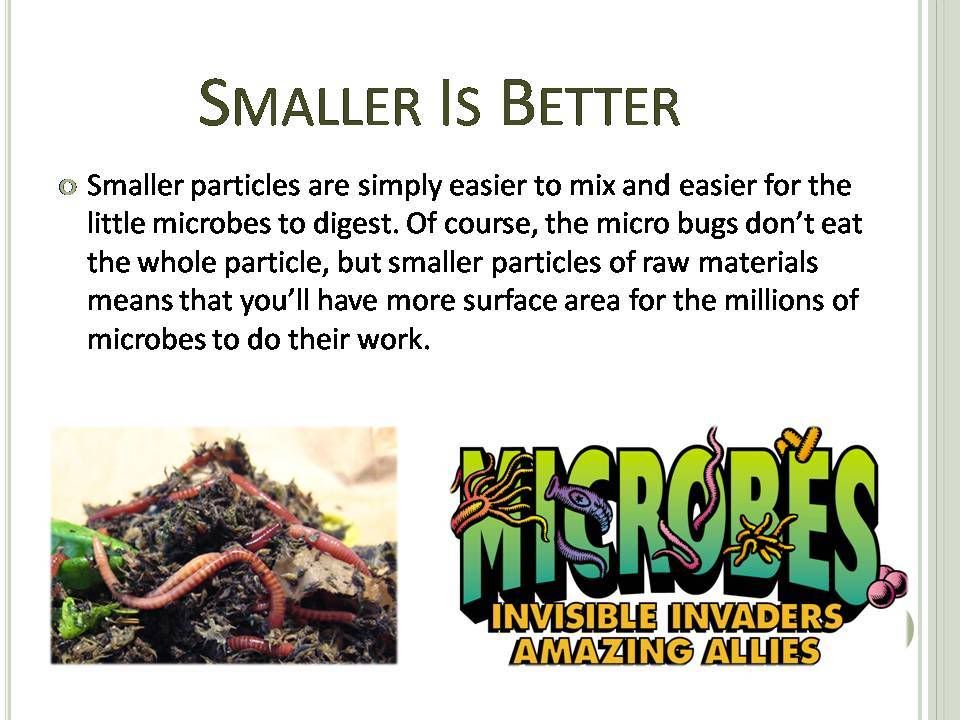
Smaller is BETTER
Smaller particles are simply easier to mix and easier for the little microbes to digest. Of course, the micro bugs don’t eat the whole particle, but smaller particles of raw materials means that you’ll have more surface area for the millions of microbes to do their work.

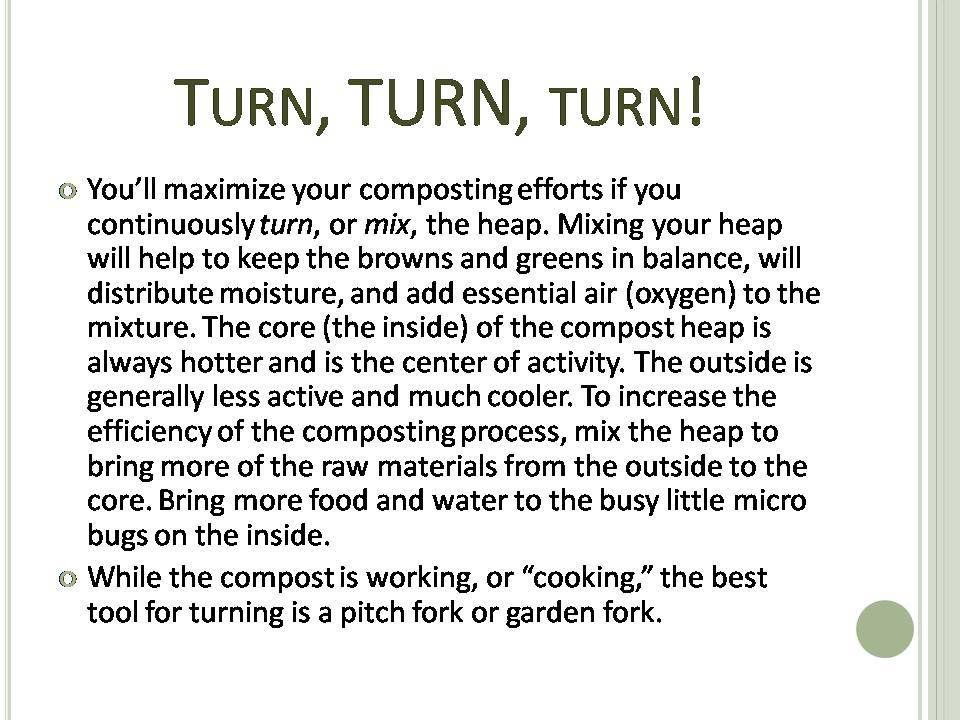
Turn, TURN, turn!
You’ll maximize your composting efforts if you continuously turn, or mix, the heap. Mixing your heap will help to keep the browns and greens in balance, will distribute moisture, and add essential air (oxygen) to the mixture. The core (the inside) of the compost heap is always hotter and is the center of activity. The outside is generally less active and much cooler. To increase the efficiency of the composting process, mix the heap to bring more of the raw materials from the outside to the core. Bring more food and water to the busy little micro bugs on the inside.
While the compost is working, or “cooking,” the best tool for turning is a pitch fork or garden fork.

    When and How to Use Compost
Soil Building – Compost is the single best additive for good, even great, garden soil. It improves tilth, fertility, water retention for sandy soils, water drainage for clay soils, and improves your soil’s disease fighting characteristics. Add compost in spring and fall, and till it in.
Garden Fertilizer – Compost can be used throughout the season as a garden fertilizer. Simply side dress vegetables and flowers for a slow-release food source and improved disease prevention.
Lawn Feeding – Screened compost (compost that has been sifted to collect the smaller particles) can be applied as a lawn fertilizer throughout the season. It will provide a wonderful slow-release food as well as assist in lawn disease prevention. And, given that the nutrients aren’t as concentrated as in chemical lawn foods, you’ll avoid the stripes that can easily occur when incorrectly applying chemicals. You’ll avoid chemical run-off, and you’ll save money. Your lawn will be alive, with earthworms (natures aerators) and beneficial microbes.
Compost vs. Mulch – Mulch is any material that is applied to the garden’s surface to prevent weed germination and to reduce water evaporation. Compost will help build the soil, and it will help retain moisture; but, it won’t do a lot to prevent weeds. It’s an ideal growing medium; so, weeds are likely to be very comfortable in it. Use shredded leaves for mulch, or a combination of shredded leaves and lawn clippings. The combination of lawn clipping and shredded leaves creates an attractive mulch that won’t blow away (as leaves alone tend to do) and allows water penetration (as grass clippings alone tend to matt and repel water).


Wednesday, September 29, 2010

Composting- A new trend in the Green movement Part 2

Using two Containers is recommended when composting. 
(The process can take several weeks)

Materials needed:
Pitch fork
Shovel
Garden cart

Key ingredients needed:
Food, water and air
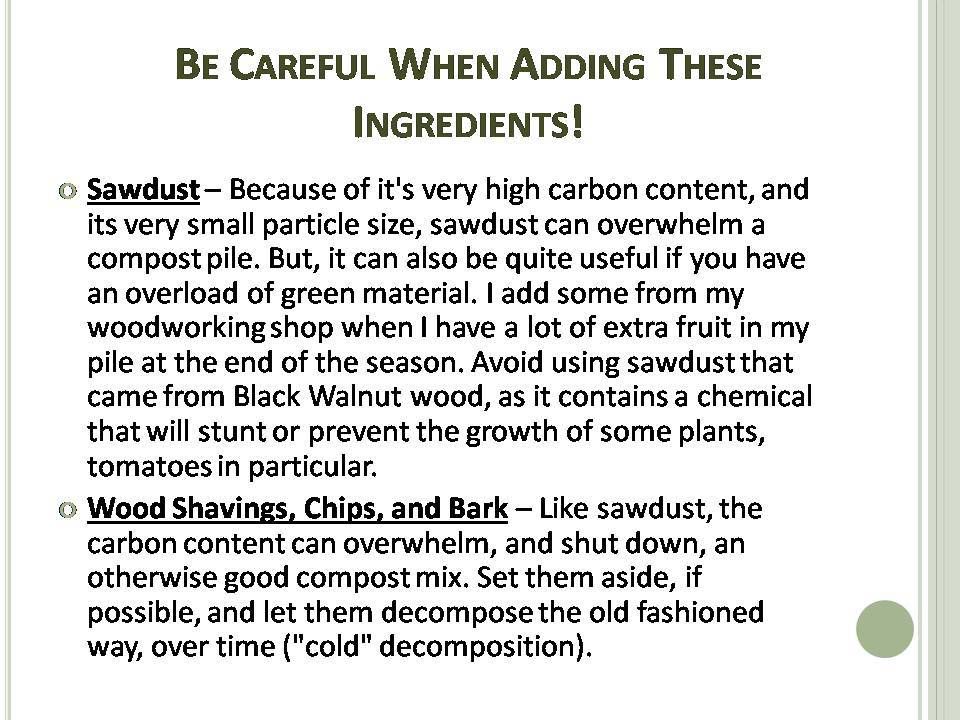
“Greens” ( grass clippings, fresh manure, fruit, vegetables, coffee grounds , tea bags, weeds, leftover fruit from garden)
“Browns”  (dry leaves, dry grass, shredded cornstalks, sawdust, straw)
The best combination of browns and greens is about 4 parts of “browns” to one part “greens” by volume.

Hot & Cold Composting

Hot composting is fast, and a well maintained compost heap can fully decompose in several weeks.

Cold composting is slower, primarily because the environment is hospitable to some of the micro bugs, but it’s hardly ideal.

Getting Started – Activators, Worms, Microorganisms
               
After you’ve built or bought a composter. You have some dry leaves and you’ll be adding green materials (lawn clippings, kitchen waste, plant scraps) all summer. To some extent, you’ll be layering these materials to provide both a balanced diet and the best mix for air and water penetration. Also if you want to try compost activators go ahead they won't hurt.

Worms can significantly improve your composting effectiveness, just as worms in the garden can improve soil tilth. My open bin compost piles have a healthy supply of worms, probably because I occasionally add a shovel full of good garden soil to my bins.


More to come next week!

www.modaainc.com

Wednesday, September 22, 2010

Composting- A new trend in the Green movement Part 1


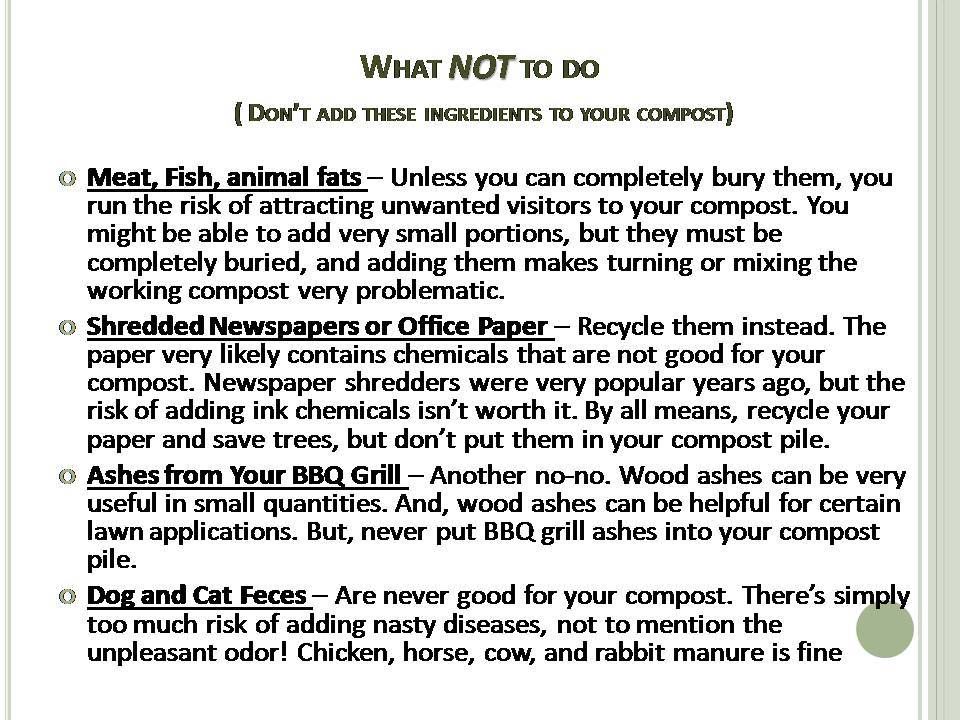
Basics of Composting
  • Composting is simply decomposing organic material.
  • The organic material can be plant material or animal matter
  • Composting is great for your garden and environmentally responsible.
  • Improves soil
  • Improves soil structure/texture
  • Provides all essential nutrients for healthy plant growth
  • Environmentally beneficial by reducing the amount of solid waste and contribution to landfills
  • Reduces dependency of chemical fertilizers
  • Save money on expensive fertilizers

To make compost you will need space. In or near your garden and close enough to where you can get to your waste.

You Can Do Your Composting In Two Ways:

1.       An open bin (constructed from wood, chicken wire, or recycled plastic.

Advantages of Open Bin Composting
Open bins easily collect rain water
Open bins are very convenient for adding materials

Disadvantages of Open Bin Composting
Open bins can attract pest and can be an eyesore
Open bins can become too wet, if not covered
Open bins may be more difficult to mix (more on that later)

2.       Enclosed container  (upright box or rotating drum)

Advantages of Compost Containers
Rarely attract pest, easy on the eyes
Rotating drums are usually easier to mix or turn
Rotating drums are easy to unload 

Disadvantages of Compost Containers
Enclosed containers usually require you to add water
Upright containers may be very difficult to mix or turn


This is part 1 of 4. Keep an eye out for for more to come.

www.modaainc.com